What Happens During a Professional Towing Service?
A stalled car can turn a calm drive into a risky roadside scene within minutes. And the roadside leaves little room for careless decisions. Research found that roadside responders face fatal and serious injury rates about 16 times higher than workers in other industries. That risk calls for trained handling. So, how does a professional towing service work from start to finish?
Quick Answer
Your towing service begins with one clear phone call. The dispatcher collects your location and vehicle details. Next, the right truck heads your way. The operator inspects the vehicle before loading it. They then transport and unload it carefully. This method works for breakdowns, accidents, failed starts, and unsafe conditions. The steps below explain each stage clearly.
When Should You Call a Professional Towing Service?
Roadside assistance may solve a minor problem where your vehicle has stopped. However, towing services become the safer choice when driving could worsen damage or place people at risk.
- Vehicle Breakdowns: Request towing when your car stops running and a roadside fix seems unlikely.
- After an Accident: Call for a tow if steering, tires, lights or panels are compromised and safer driving is not possible.
- Flat Tire Without a Spare: A tow can move your car when no usable tire is available.
- Engine Failure: Stop driving when the engine stalls, smokes, knocks or suddenly loses power.
- Overheating: Continuing to drive may cause greater engine damage and expensive repairs.
- Dead Battery That Can’t Be Jump-Started: Towing may be required when repeated jump attempts fail.
- Unsafe Driving Conditions: Call when weather, damage or poor visibility makes driving unsafe.
Step 1 – Contacting the Towing Company
The first call provides the dispatcher enough information to send suitable help. Clear details save time and reduce confusion beside a busy road.
- Exact Location: Share the road, direction, nearby exit, landmark or live map location.
- Vehicle Details: Provide the make, model, year, color and license plate.
- Vehicle Condition: Explain whether the car starts, rolls, steers, leaks or has crash damage.
- Requested Destination: Name the repair shop, dealership, storage lot, home or approved location.
- Safety Instructions: Follow the dispatcher’s advice and keep your phone available.
Turn on hazard lights when safe. Stay away from moving traffic and never stand directly behind your vehicle. All states have Move Over laws for roadside workers, though coverage for disabled vehicles varies by state.
Step 2 – Dispatching the Right Tow Truck
Not every truck suits every vehicle. The dispatcher considers drivetrain, damage, size, clearance, location and towing distance. Correct equipment helps protect tires, suspension, bodywork and drivetrain parts.
Flatbed Tow Trucks
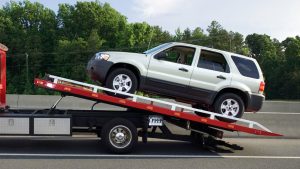
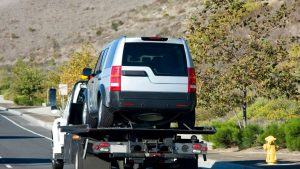
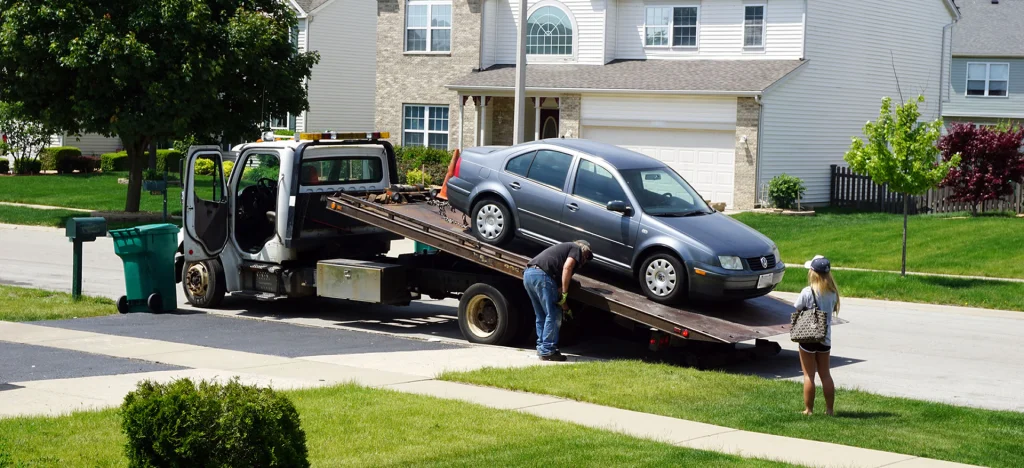
A flatbed carries the entire vehicle above the road. Flatbeds are a secure choice for badly damaged vehicles and many AWD or 4WD models.
Flatbed towing often suits the following:
- Luxury Vehicles: Full platform support limits road contact during transportation.
- AWD and 4WD Vehicles: Lifting every wheel can protect drivetrain parts.
- Motorcycles: Proper mounts and straps keep the bike stable.
- Accident Vehicles: A winch can load cars that cannot move normally.
- Low-Clearance Cars: Careful loading can protect bumpers and underbody parts.
Wheel-Lift Tow Trucks
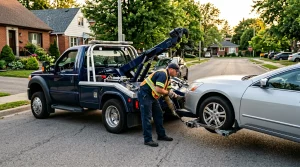
A wheel-lift raises one end while two wheels remain on the road. It often suits lighter vehicles, local trips and tight pickup areas when the vehicle design permits.
- Standard Passenger Vehicles: Many two-wheel-drive cars can use this method.
- Short-Distance Towing: The compact setup supports quick local movement.
- Tight Locations: Smaller trucks can reach spaces where flatbeds may struggle.
Step 3 – Arrival and Vehicle Assessment
When the truck arrives, the operator checks the scene before moving anything. Think of this stage like a doctor’s first examination. A few careful minutes can prevent the wrong loading method.
- Driver Introduction: The operator identifies the company and confirms your request.
- Scene Review: Traffic, road angle, weather, debris and working space are checked.
- Vehicle Inspection: The operator reviews tires, steering, body damage and leaking fluids.
- Loading Method: Findings guide truck position, lift points, winch route and equipment.
- Destination Review: You confirm where the vehicle should be delivered.
- Final Instructions: Share alarms, wheel locks, keys or special vehicle details.
Take quick photos before loading when conditions allow. They create a record of visible vehicle condition.
Step 4 – Preparing the Vehicle for Towing
Preparation turns a disabled vehicle into a secured load. The operator positions the truck, connects approved equipment and checks each attachment before moving.
- Securing the Vehicle: Straps, chains, wheel nets or tie-downs hold it in position.
- Using Proper Equipment: Winches, dollies, ramps and lifts match the vehicle’s condition.
- Protecting Tires and Suspension: Correct contact points reduce pressure on sensitive parts.
- Checking Clearance: The operator watches bumpers, spoilers, exhaust parts and the underbody.
- Completing Safety Checks: Connections receive another check before entering traffic.
Step 5 – Safe Transportation to Your Destination
Once loaded, your vehicle becomes the operator’s responsibility during transportation. Smooth driving matters because sudden turns or hard braking can place extra force on the secured car.
- Careful Driving: Gradual acceleration, wider turns and steady braking reduce movement.
- Route Planning: The driver considers traffic, construction, distance and destination access.
- Traffic Awareness: Extra following space provides more room for safe braking.
- Damage Prevention: The operator watches for movement or loose equipment.
- Delay Updates: The company may contact you when road conditions affect arrival.
Some companies allow one customer inside the cab when seating and policy permit. Ask during the first call rather than assuming space is available.
Step 6 – Vehicle Unloading and Final Inspection
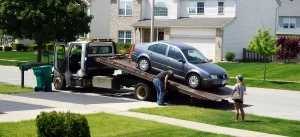
At the destination, the operator chooses a safe unloading position. The vehicle is released carefully and placed where the customer or repair shop requested.
- Safe Unloading: The operator lowers or releases the vehicle with controlled equipment.
- Correct Placement: The car is parked without blocking traffic or creating another hazard.
- Condition Check: You can review visible areas after unloading.
- Customer Confirmation: The destination and placement are confirmed.
- Service Completion: Payment, receipt, keys and paperwork are handled.
Keep your receipt and condition photos. These records may help with insurance or repair questions.
Why Professional Towing is Safer Than DIY Towing
DIY towing can look simple until weight, traffic, braking distance and drivetrain limits enter the picture. We advise checking manufacturer guidance because the wrong method may damage the transmission or drivetrain.
| Safety Factor | Professional Towing | DIY Towing |
| Equipment | Uses purpose-built trucks, winches, lifts and rated restraints | Often relies on ropes, chains or unsuitable personal equipment |
| Vehicle Match | Matches the method with drivetrain, damage, weight and clearance | May overlook AWD systems or manufacturer limits |
| Loading | Uses controlled angles, proper points and trained handling | Poor attachment can damage frames, bumpers or suspension |
| Road Safety | Uses warning lights and commercial driving practices | Weak visibility and braking control can raise collision risk |
| Damage Control | Checks the vehicle before, during and after transport | Damage may remain unnoticed until the trip ends |
| Accountability | Provides service details, company records and receipts | Responsibility may become unclear after an incident |
Get More Information on Towing Services!
A breakdown can turn an ordinary drive into a stressful roadside problem within seconds. Knowing the towing process gives you more control when that moment arrives. Share clear vehicle details, follow roadside safety instructions and ask which truck will handle your car.
Zee Towing provides professional towing services for breakdowns, damaged vehicles, motorcycles and other roadside needs. When your vehicle cannot continue safely, don’t gamble with improvised towing or another risky mile.
Contact a trained towing team, confirm your destination and let proper equipment move your vehicle carefully from pickup through final placement, so everyone reaches the next stop safely.
Frequently Asked Questions (FAQs)
Do Tow Companies Let You Ride with Them?
A few companies take one customer inside the cab when an empty seat is available. Your situation depends on your company, insurance terms, number of passengers and local rules. Check with the dispatcher before the truck arrives.
What are Some Red Flags When Choosing a Towing Service?
Watch for unclear prices, lack of company identification, pressure toward an unfamiliar repair shop, incomplete paperwork or even a truck you never requested. Check for unknown operators when you are ready to release your vehicle after a crash.
What to Say When Calling a Towing Company?
Provide your location, vehicle model, status, destination and risks along the way Add in all-wheel drive, a low-clearance vehicle, collision damage or locked wheels and leaking fluids or passengers needing transport.
When to Call a Tow Company?
Call when your vehicle cannot move safely after a crash, breakdown, engine problem, failed jump-start, overheating event or flat tire. Towing services also make sense when driving may increase damage or danger.
Latest Post